In Part 1 we covered the war for the counter. Now we go deeper — where the real moats are built.
In Part 1, we left a shopkeeper named Ramesh happily accepting payments, getting paid faster, and taking a loan against his sales. That’s where most people think the story of merchant acquiring ends — at the counter. It’s actually where the real story begins.
Because winning that free transaction was never the goal. It was the front door. Once a player has a merchant accepting payments, the genuine contest starts: climbing from that doorway up into the merchant’s cash flow, their loans, their payroll, their accounting software, their ERP system — and ultimately their entire business. The payment is a loss leader. The merchant’s operations, financing, and ecosystem are the prize.
This is Part 2 — the deeper map. The model that explains every player’s strategy; why a kirana and a national enterprise are two completely different wars; how payments quietly disappear into the software a business runs on; the strange game where payment companies route through each other; how each giant turns its own ecosystem into a moat; and a player-by-player read of who’s playing which game.
The one idea that explains everything: payments is a doorway
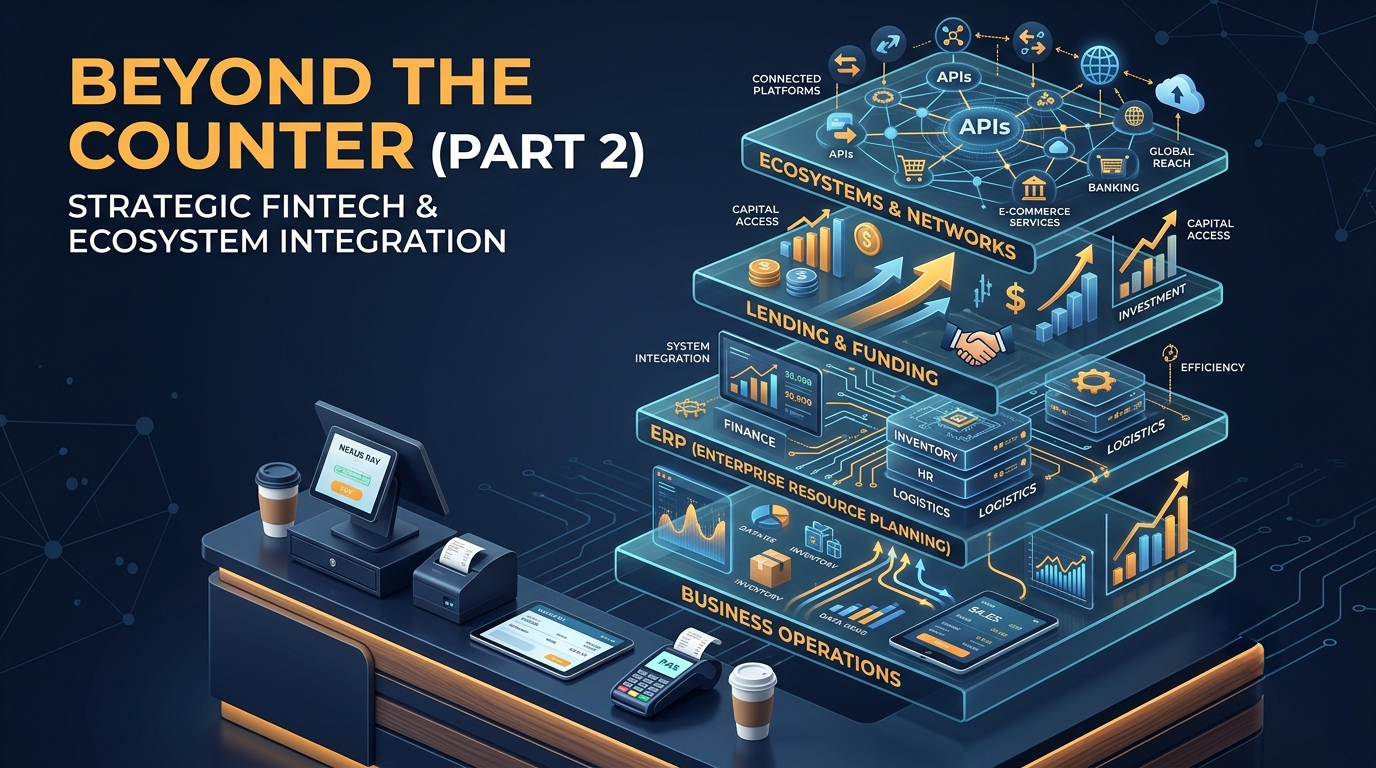
Anchor the whole thing in a single mental model. Picture a merchant relationship as a building with five floors. Every player is trying to get a merchant in the front door — and then ride the lift all the way up.
The front door. Free on UPI, low-margin on cards. The hook — not the profit.
How fast the merchant gets paid; payouts to vendors and staff.
Loans underwritten on the merchant’s own transaction data. The profit engine.
Banking, payroll, billing, reconciliation, inventory — woven into how the business runs.
Ads, customer base, brand partnerships, marketplaces — making the merchant sell more.
Here’s the whole strategy in one line: everyone competes on floor 1, but the war is won on floors 2 through 5.
The great divide: SMB vs Enterprise
A neighbourhood kirana and a national retail chain are both “merchants,” but selling to them and serving them are almost entirely different businesses.
| SMB / Small Merchant | Enterprise / Large Business | |
|---|---|---|
| What they want | Get paid, quick loan, simple reliable device | Deep integration, reliability at scale, custom terms |
| The hook | Soundbox, instant settlement, working-capital loan | ERP integration, payment orchestration, large payouts |
| How they’re won | Feet-on-street sales, mass distribution | Long enterprise sales cycle, key account management |
| Stickiness comes from | Lending + device habit | Integration depth — once in ERP, switching is brutal |
Where payments disappear: into the business’s own systems
The deepest acquiring relationships aren’t visible at a counter at all — they happen inside the software a business already runs on.
When payments are embedded directly into a company’s ERP (Tally, SAP, or custom platforms), an invoice can be raised, approved, paid, and reconciled without leaving the system. The payment provider stops being a vendor at the edge and becomes load-bearing infrastructure in the middle.
The shallowest integration transmits a payment. The deepest integration becomes part of how the business operates — sitting inside its ERP, settling its money, paying its vendors, running its payroll. That depth is what wins and keeps enterprises.
The strangest game: Payment Orchestration
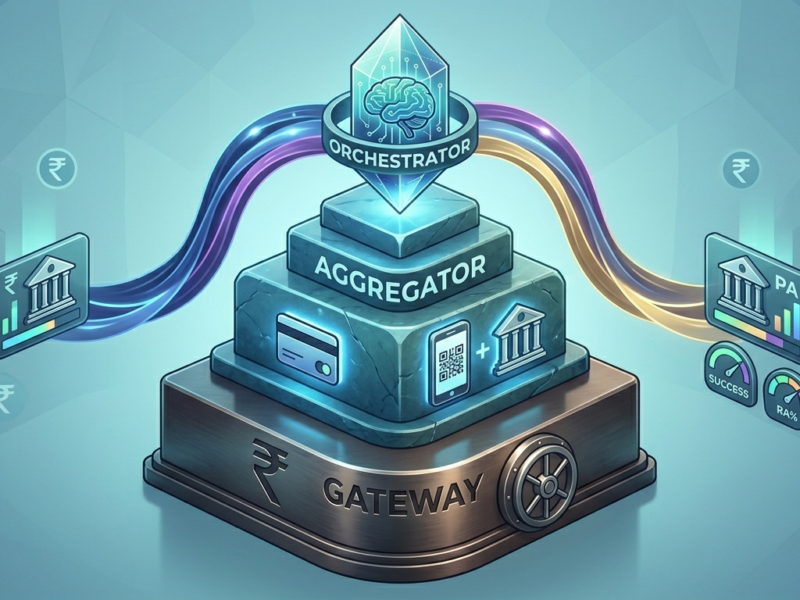
Among large merchants, payments often don’t flow through one provider. They flow through a system that sits above several providers and routes each transaction to whichever performs best. This is payment orchestration.
The orchestrator sees every transaction across every provider — that’s the most valuable vantage point in the entire system. The fight over orchestration is really a fight over who owns the enterprise merchant’s payment brain.
The ecosystem weapon
The biggest players don’t compete only on payment features. They compete by pulling the merchant into a much larger ecosystem that rivals simply don’t have.
| Player | The ecosystem weapon beyond payments |
|---|---|
| Google Pay | Massive high-intent audience + Google Ads engine. Win the merchant, then grow their demand through advertising. |
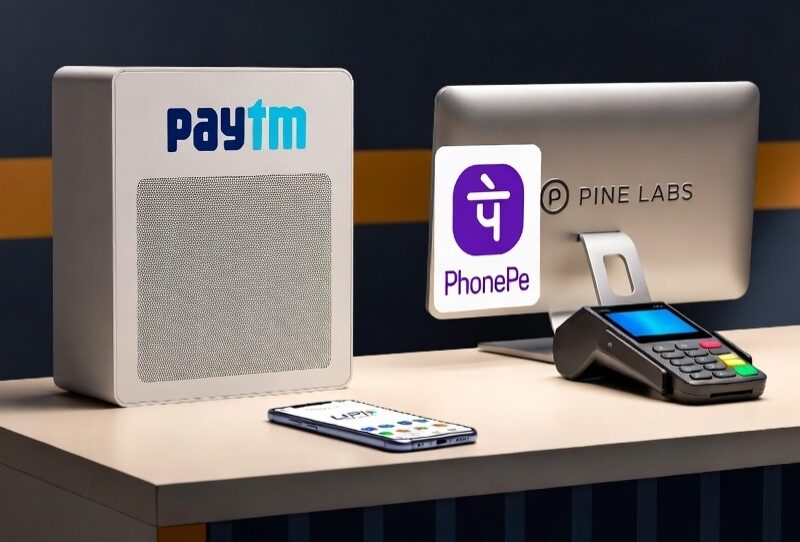
| Paytm | Huge consumer base + wallet + bill payments + commerce surfaces. |
| PhonePe | India’s largest UPI consumer base + commerce + insurance + wealth. |
| Pine Labs | Deep enterprise-retail relationships + gift cards + EMI + embedded finance (Setu). |
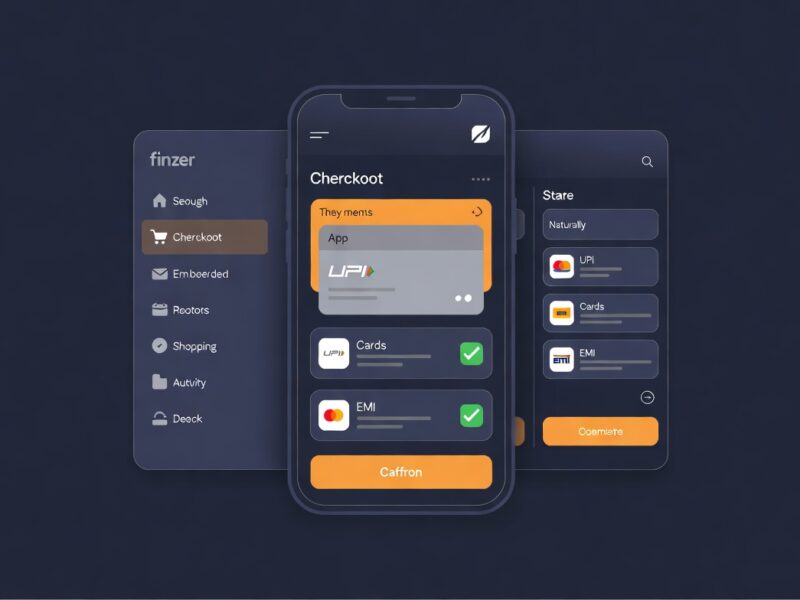
| Razorpay | Full financial OS — banking, payroll, capital — so digital businesses run operations on Razorpay. |
Player by player
Won the smallest merchants first with unmatched feet-on-street and the soundbox it invented. Weapon above floor 1: a vast consumer base, wallet, and lending stack.
Brings India’s largest payment audience to every merchant it signs. The game is converting unmatched payments scale into the full upper-floor stack.
Its weapon is unique: a massive high-intent audience + the Google Ads engine. It can win a merchant on payments and then grow their demand through advertising.
Owns the swipe machine at large retailers with an integrated suite: POS, EMI, gift cards (Qwikcilver), and embedded finance (Setu).
Owns the “Pay Now” button for much of the Indian internet, then climbed into a full financial OS (banking, payroll, capital). The software stack itself is the moat.
The bottom line
Merchant acquiring looks like a fight over who processes payments. It isn’t. It’s a fight over who gets to own the merchant — their data, their cash flow, their financing, their operations, and their growth — with the free payment serving as the doorway in.
That’s why the strategies diverge so sharply. Paytm and PhonePe weaponise consumer scale. Google weaponises audience and advertising. Pine Labs weaponises enterprise integration. Razorpay weaponises a full financial operating system.
The War for the Counter
Covers the foundation — what merchant acquiring is, why a free payment is worth fighting over, and why merchants switch. Read Part 1 →
- Interchange Waterfall Visualizer
- Who Pays for Your Free UPI Payment?
- No-Cost EMI & Scheme IRR calculators
Note: Market figures are drawn from public reporting and industry estimates as of 2025–26. This is analysis and commentary, not financial or investment advice.