*Money Movement · 24 June 2026*
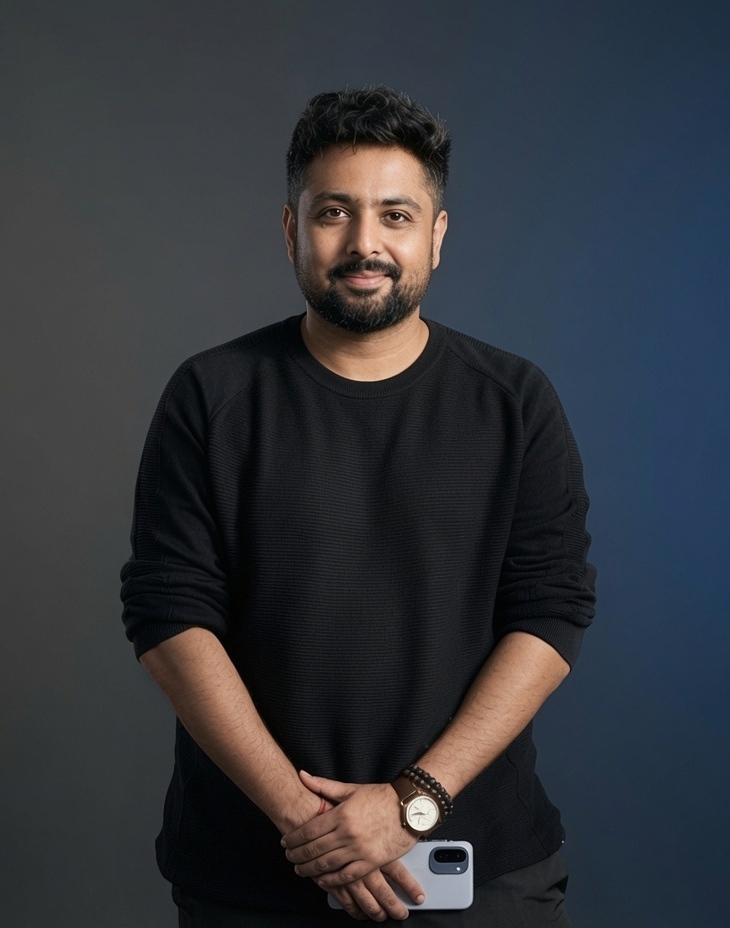
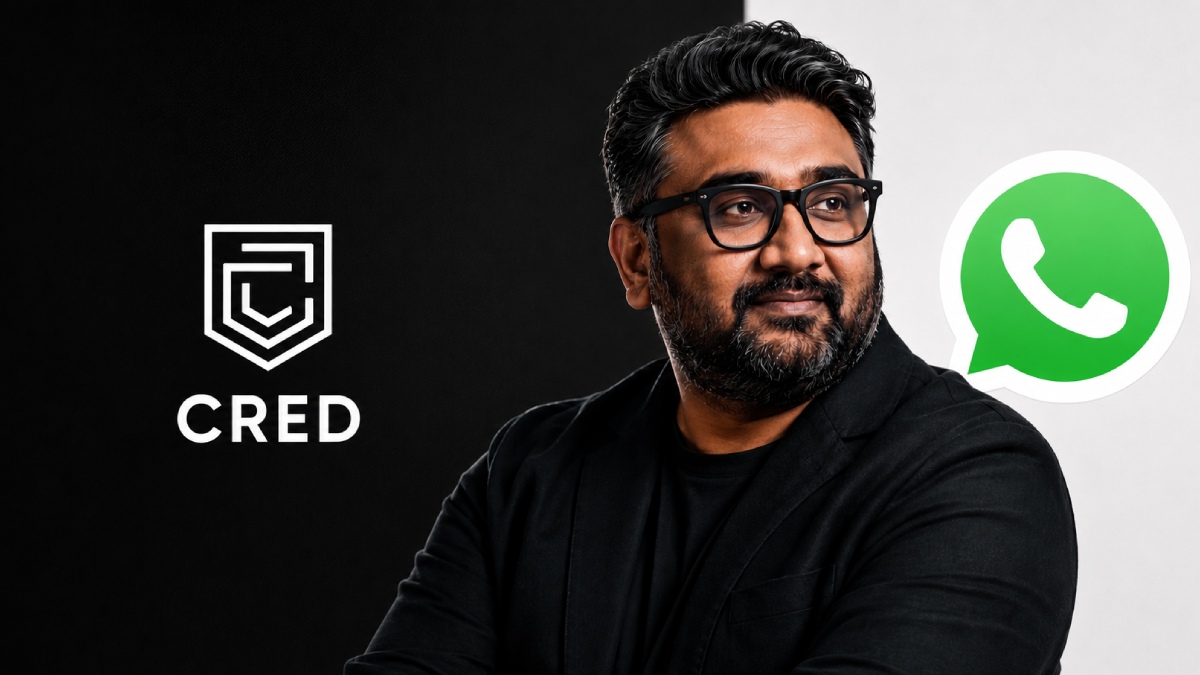
On the surface, this looks like a payments story. CRED’s founder takes over WhatsApp; Meta writes a $900 million cheque into CRED; everyone nods — ah, Meta finally wants to crack payments in India.
That reading is right about the facts and wrong about the strategy.
Because if Meta only wanted payments expertise, India is full of people who’ve actually won the payments war. The men and women who built PhonePe and Google Pay into a duopoly processing the overwhelming majority of UPI’s 23 billion monthly transactions — those are the payments operators. Kunal Shah is not one of them. Here’s the irony almost no one has stated plainly: in May 2026, CRED ranked 8th in UPI with about 0.68% market share — sitting just above WhatsApp Pay’s 0.65%. Two of the smallest players in Indian payments just merged leadership.
So Meta didn’t hire the person who won payments. It hired the person who is, arguably, the best in the country at a different and rarer thing: manufacturing engaged behaviour around money. And once you see the move through that lens instead of the payments lens, the entire strategy snaps into focus.
Let me walk you through what Meta is actually buying, what it expects, and the much broader vision hiding under the headline.
The problem Meta has — and it isn’t a payments problem
Start with WhatsApp’s real condition in India, because it’s stranger than people admit.
WhatsApp has everything except the thing that matters. It has over 500 million Indian users. It has total ubiquity — it is, functionally, the country’s communication layer. It launched WhatsApp Pay back in 2018. NPCI eventually lifted every user cap by end-2024. WhatsApp Pay rides on the most-used app in India, with distribution any fintech would kill for.
And it went nowhere. WhatsApp Pay sits at the bottom of the UPI table, beneath apps with a fraction of its reach.
Sit with how unusual that is. The most-used app in India, with a payments product, in the most successful digital-payments market on earth — and it lost. That tells you something crucial: the bottleneck was never distribution. It was behaviour. People had WhatsApp Pay sitting in their pocket and simply didn’t form the habit of using it. They opened PhonePe or Google Pay instead.
This is the precise problem Kunal Shah has spent his career solving. CRED never had the most users — it deliberately targeted a narrow, affluent slice. What it had was engagement: it turned the deeply boring act of paying a credit card bill into something 17 million high-value people did habitually, with rewards, status, and a sense of belonging wrapped around it. CRED’s genius was never the product category. It was the behavioural engineering — making people want to do a financial chore.
Meta doesn’t have a distribution problem with WhatsApp. It has CRED’s original problem in reverse: infinite reach, no habit. So it hired the habit guy. That’s the first layer.
What Meta is actually buying: the super-app it could never quite build
Now zoom out, because payments is just the wedge. The real ambition is written all over Meta’s recent moves if you connect them.
Meta is openly trying to turn WhatsApp from a messaging app into a super-app — payments, commerce, business services, and increasingly AI, woven into one surface. This is the WeChat dream that Western tech has chased and missed for a decade. And India is the one market where the conditions to build it actually exist: a billion-plus digital identities, the cheapest data in the world, UPI as free public payments infrastructure, and a population that already lives inside WhatsApp.
Here’s the strategic insight: you cannot build a super-app on a foundation of payments alone. You build it on a foundation of engagement, and then layer commerce on top. WeChat didn’t win because its payments were superior; it won because it became the place people did things, and payments rode along underneath. WhatsApp tried to bolt payments onto a messaging app and it stalled, because payments without a reason to engage is just a feature nobody opens.
So look at what Shah actually represents to Meta. He is not a payments hire. He is the architect Meta is betting can do for WhatsApp’s three billion users what he did for CRED’s seventeen million — turn a passive surface into an active financial habit, and then let commerce, lending, and merchant services flow through the habit. The payments piece (WhatsApp Pay finally mattering in India) is the first deliverable. The super-app (WhatsApp as the place Indians shop, pay, borrow, and transact with businesses) is the actual deliverable. And the layer above even that — AI agents inside WhatsApp that don’t just chat but act, transacting on your behalf — is where Meta clearly believes the next decade goes.
That’s the broader vision. Payments is the wedge; the super-app is the building; AI-driven commerce is the roof.
And then there’s the $900 million — which isn’t what it looks like either
The cheque deserves its own reading, because the obvious interpretation is the wrong one.
The obvious read: “Meta paid $900 million to hire Kunal Shah.” That’s not it — Shah keeps his CRED shareholding, Meta becomes a minority investor, and Shah has been explicit that despite Meta’s roughly 20% stake, Meta gets no access to CRED’s member data. This is not an acquisition. CRED stays independent and IPO-bound, with Miten Sampat stepping in as interim CEO.
So what did the $900 million actually buy? Three things, and none of them is “payments tech”:
One — it bought the founder without the baggage. A clean way to bring Shah into Meta’s leadership while keeping CRED whole, its cap table happy, and a fintech relationship warm. The investment is the bow on the recruitment, not the price of it.
Two — it bought a strategic option on Indian fintech infrastructure. Even without data access, having deep alignment with one of India’s most sophisticated consumer-finance operators is worth a great deal as Meta tries to build financial products for the same market. It’s a relationship asset.
Three, and most importantly — it bought a template. And this is the part the Indian startup ecosystem should be paying the closest attention to.
The move under the move: a new playbook for Indian talent
For two decades, the deal for ambitious Indian operators was: build a company, and if you’re wildly successful, a Western giant acquires it. The company gets absorbed, the founder usually leaves within a couple of years, the product gets folded in or shut down. Talent flowed out through acquisition.
This move rewrites that. Meta didn’t acquire CRED and install Shah somewhere inside it. It put an Indian founder in charge of one of its global crown-jewel products — a three-billion-user platform — while leaving his Indian company independent. Investors are already reading it as a template: if it works, expect more deals where global giants hire proven emerging-market founders to run global products, rather than buying their companies and burying them.
Think about what that signals. It’s an admission that the hardest skill in consumer technology right now — building genuine engagement and habit in a billion-user, low-ARPU, regulation-dense market — is a skill that emerging-market founders have and Silicon Valley, for all its capital, often lacks. The people who’ve scaled consumer tech multiple times in markets like India are a tiny roster. Meta just drafted one of them to lead globally. That’s not a payments story or even an India story. It’s a statement about where a certain kind of irreplaceable expertise now lives.
So what should we actually expect? A realistic roadmap
Near term (the next year), watch for WhatsApp Pay to finally get serious in India — not through more distribution (it has that) but through engagement mechanics: rewards, reasons to open it, status loops, the CRED-style behavioural layer. If Shah’s thesis is right, the metric that moves first isn’t users (already there) but frequency. Watch whether Indians start choosing WhatsApp to pay, not just having the option.
Medium term, watch the commerce layer. Business messaging is already one of WhatsApp’s few real monetisation successes. The natural build is payments + business messaging + catalogues + AI assistants converging into in-chat commerce — you discover, ask, decide, and pay without leaving the conversation. India, with its millions of small merchants already on WhatsApp, is the perfect proving ground.
Longer term, watch the AI-agent thesis. Meta’s broader bet is that WhatsApp becomes a place where AI doesn’t just answer but acts — and acting, ultimately, means transacting. Payments rails plus AI agents plus a habit of using WhatsApp for money is a genuinely new model of commerce. That’s the prize Meta is really playing for.
But hold the skepticism too, because the graveyard is real. WhatsApp Pay has failed in India once already, with every structural advantage. The duopoly of PhonePe and Google Pay is deeply entrenched and not standing still. Zero MDR means there’s little direct money in UPI payments themselves — the monetisation has to come from the commerce and credit layered on top, which is exactly the hard, unproven part. And one brilliant operator, however gifted, is inheriting an organisation, a regulator relationship, and a competitive position that won’t bend just because the leadership changed. Engagement is Shah’s superpower, but he’s now applying it at a scale, and inside a bureaucracy, unlike anything he’s run before.
The bottom line
Meta looked at WhatsApp’s failure in payments and correctly diagnosed it as a failure of behaviour, not distribution — and went out and hired the person many consider India’s finest behavioural architect around money, structured as an investment rather than an acquisition, in a move that may rewrite how global tech sources emerging-market talent.
It is more than a payments story. Payments is the wedge that gets the door open. What’s behind the door is a decade-long attempt to finally build the Western world’s first true super-app — on the one foundation that has always actually mattered, and that Meta has always lacked: the habit of people wanting to come back.
Money Movement is written by Shreyas Khare — payments and partnerships operator. Decoded from inside the deals, not read off a press release.
This is strategic analysis and opinion, drawn from public reporting as of 24 June 2026. Market-share and transaction figures are sourced from NPCI data and public reporting; specifics may have shifted since publication.