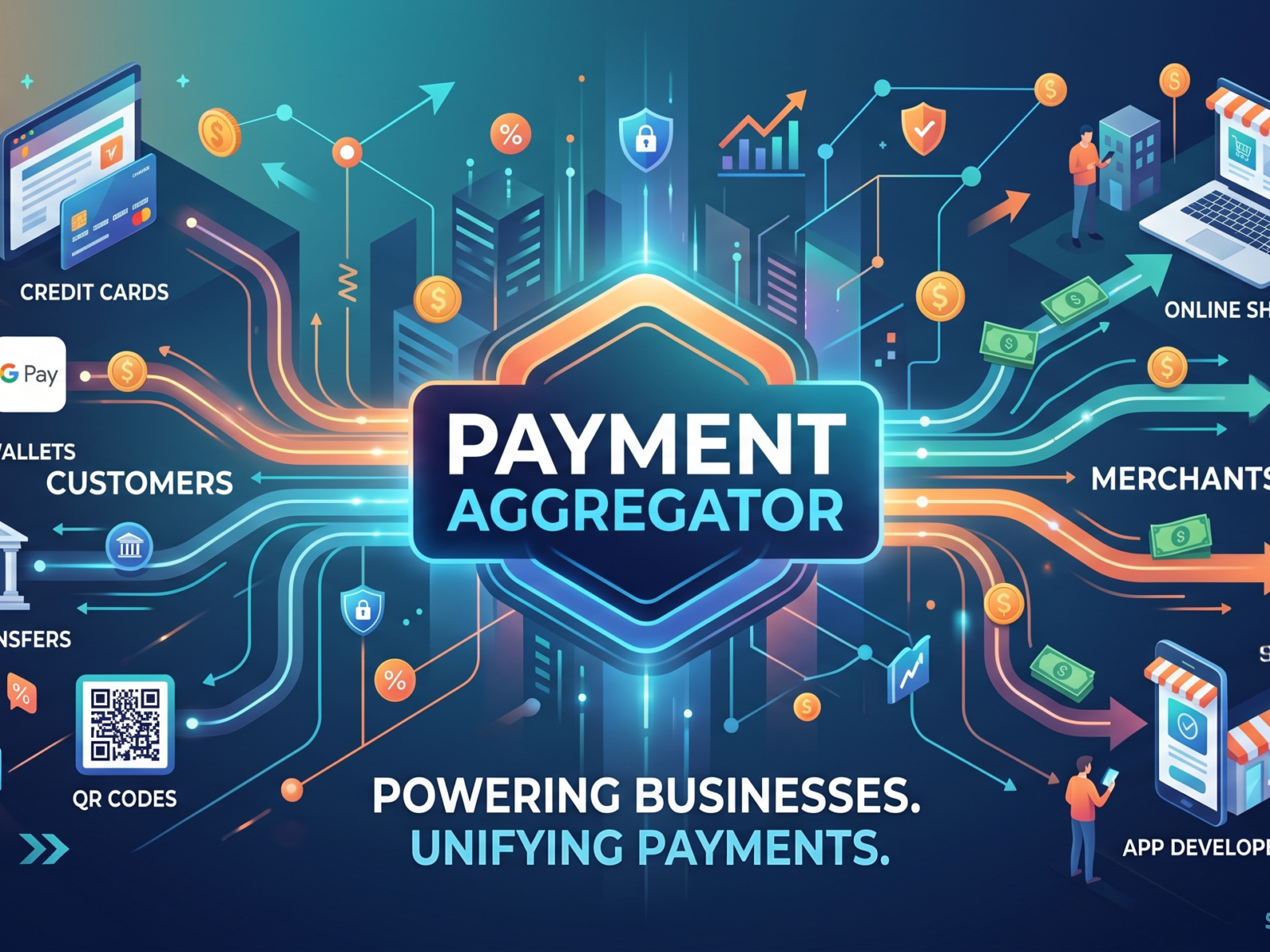
Imagine you want to start selling products online. You need to accept payments from customers using UPI, credit cards, debit cards, and net banking. But setting up direct relationships with banks, card networks (Visa, Mastercard), and NPCI is complicated, expensive, and time-consuming — especially for small businesses.
This is exactly why Payment Aggregators exist.
What is a Payment Aggregator?
A Payment Aggregator (PA) is a company that enables businesses to accept digital payments without having to build direct banking relationships themselves.
It acts as a middle layer between the merchant and the banking system. The merchant signs up with the Payment Aggregator, and the aggregator handles all the complexity — onboarding, compliance, technical integration, and settlements.
In simple terms: Instead of every business going to the bank individually, the Payment Aggregator becomes the single point of contact for hundreds or thousands of businesses.
How Does a Payment Aggregator Work?
Here’s the basic flow in simple steps:
Payment Aggregator vs Payment Gateway
This is one of the most common points of confusion. Here’s the clear difference:
| Aspect | Payment Aggregator (PA) | Payment Gateway (PG) |
|---|---|---|
| Relationship with Bank | Aggregator has direct relationship with banks and NPCI | Merchant needs their own merchant account with a bank |
| Onboarding | Fast and simple (KYC done by aggregator) | Complex and slow (merchant deals directly with bank) |
| Best For | Small & medium businesses, startups, platforms | Large businesses with high volume |
| Compliance & Risk | Aggregator handles most regulatory requirements | Merchant is directly responsible |
| Settlement | Aggregator settles funds to merchant | Bank settles funds directly to merchant |
| Examples in India | Razorpay, Cashfree, Paytm, Pine Labs, PhonePe for Business | Traditional bank gateways, some enterprise solutions |
Why Do Businesses Use Payment Aggregators?
Popular Payment Aggregators in India
Razorpay — One of the most popular choices for startups and online businesses. Known for developer-friendly APIs and additional products like RazorpayX and financing solutions.
Cashfree Payments — Strong focus on reliability, payouts, and serving both small merchants and growing platforms.
Paytm — Offers a wide ecosystem including payments, QR codes, and business tools, especially useful for offline + online merchants.
Others: Pine Labs, PhonePe for Business, and several bank-backed aggregators.
Key Takeaway
A Payment Aggregator is essentially a one-stop payment partner for businesses. It removes the complexity of dealing with banks directly and allows companies to start accepting payments quickly, securely, and with minimal technical effort.
Note: In India, Payment Aggregators are regulated by the Reserve Bank of India (RBI) under the Payment and Settlement Systems Act. Only licensed entities can operate as Payment Aggregators.
Discussion